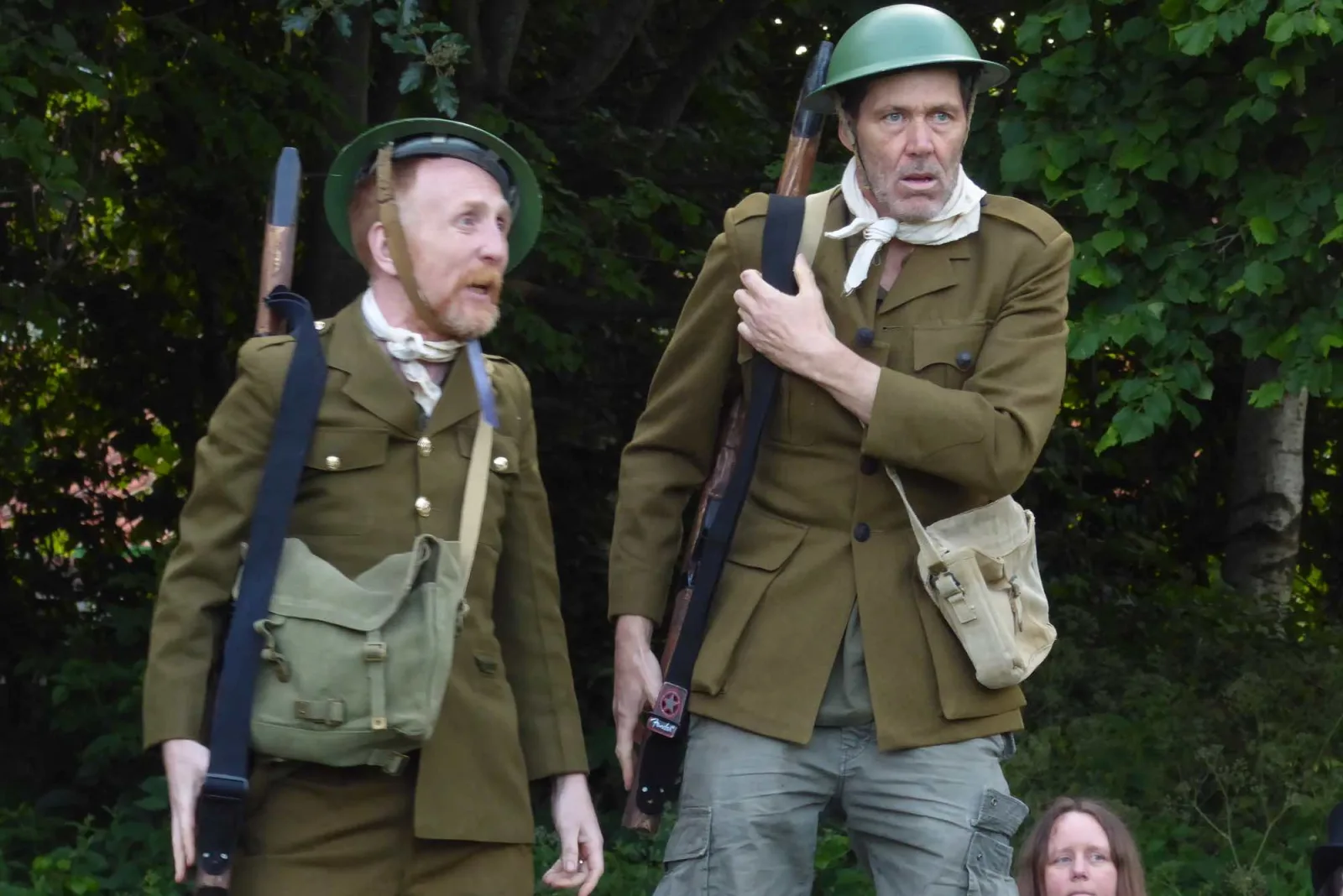
Songs of Hope and Protest
Common Lot for, once again, coming up with a community-based show that is entertaining, educational, topical, and inspiring. It does them, and Norwich, proud. Go see it.

Hope and protest. Powerful partners in any struggle to end oppression and remove injustice. For
their latest project, Norfolk community theatre group The Common Lot joined forces with
Our Subversive Voice, a history and politics research project based at the University of East Anglia.
The result is 'Songs of Hope & Protest', a 70 minute show which distils absolutely the essence of
musical protest, and is performed by a passionately fuelled cast with their engaging and
entertaining narrative. It is presented this week to the people of Norwich as a series of free
outdoor shows, and on a balmy Wednesday night in Mile Cross, it premiered in Peterson Park.
A cast of over 50 performers and a sizeable audience had already assembled as I arrived. There was somewhat of a festival atmosphere developing as we congregated around the makeshift stage. Entirely separately, and totally unconnected with tonight's show, local teenagers had arrived on bikes, together with boom-boxes and hip-hop music, and were setting up on the opposite side of the park. It was a perfectly personified example of the democracy of our public spaces.
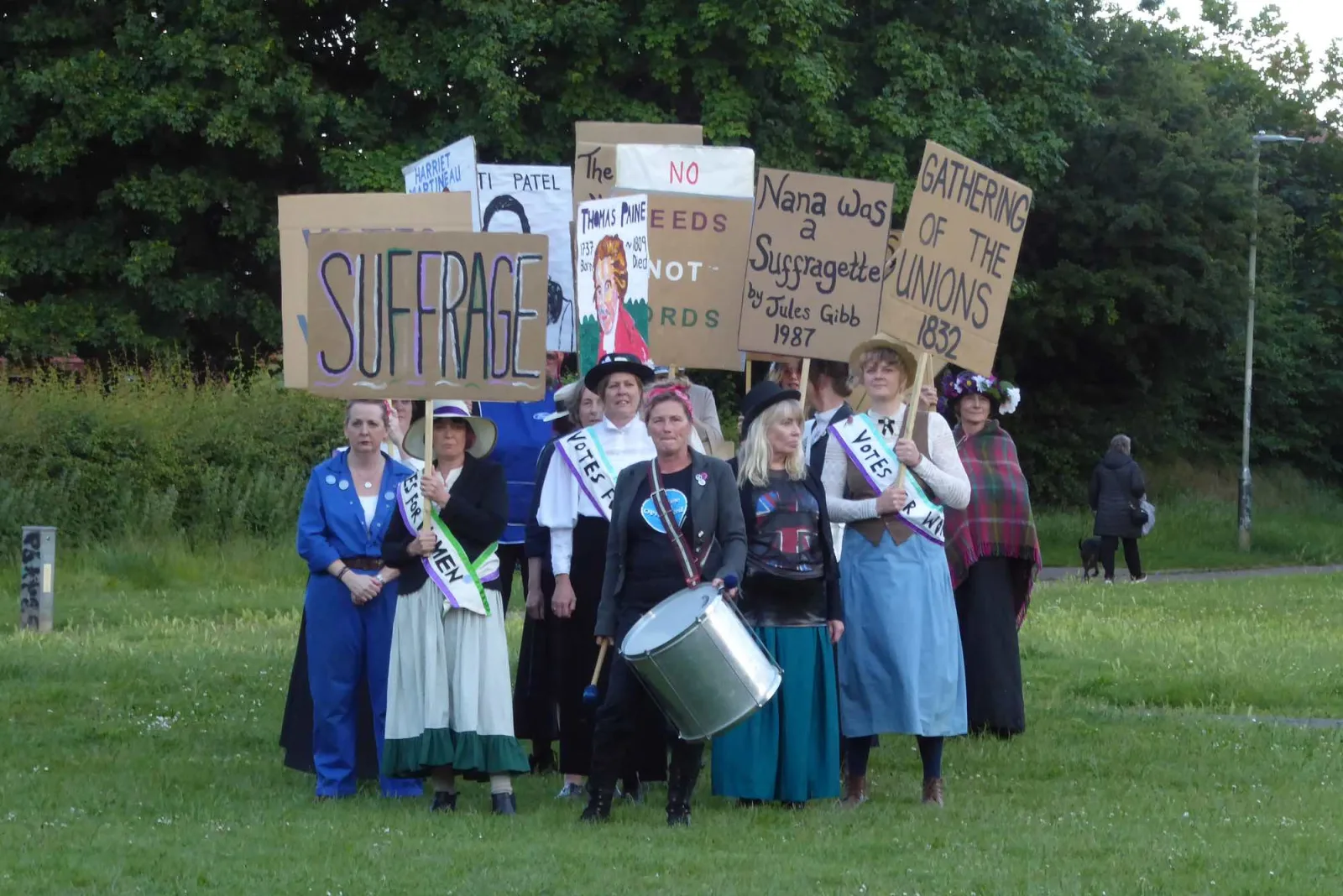
'Songs of Hope & Protest' draws from a mixture of material, some dating back as far as 1793. It also includes songs written specifically for The Common Lot by Charlie Caine. In the opening number the cast sing of disillusionment, and of their despair of “the rich growing richer off our back”, a theme that also resonated in 'It's 1549', a song from The Common Lot's earlier tale of local hero Robert Kett's rebellion against the land enclosures.
We are taken through a brief history of rebellion that includes reference to the 1795 Manifesto of the Norwich Patriotic Society (later set to music by The Voice Project), Joseph Mather's appropriation of the national anthem in 1793's 'God Save Great Thomas Paine', and words of Norwich's Harriet Martineau from 1832, set to music in 'The Gathering of the Unions'. It proudly portrays Norwich's reputation as a city that has never tolerated injustice or unfairness. 'Bella Ciao', a traditional Italian protest song is coupled with The Common Lot's 'Raise a Glass', in a celebration of the city “where a stranger can become a friend”.
In 'The Ballbreaker Blues', an original song with words by Siobhan O'Connor and Georgia Philip, misogynistic terminology and behaviour is called out, but “those names keep on coming”. However, successful protests, such as the campaign for women's suffrage are honoured in Jules Gibb's 'Nana Was A Suffragette'. We also celebrate Tom Robinson's 1976 anthem of sexual diversity in 'Glad To Be Gay'. These are songs with which we now celebrate the collective power of musical protest, whilst recognising that the battles are not yet always won.

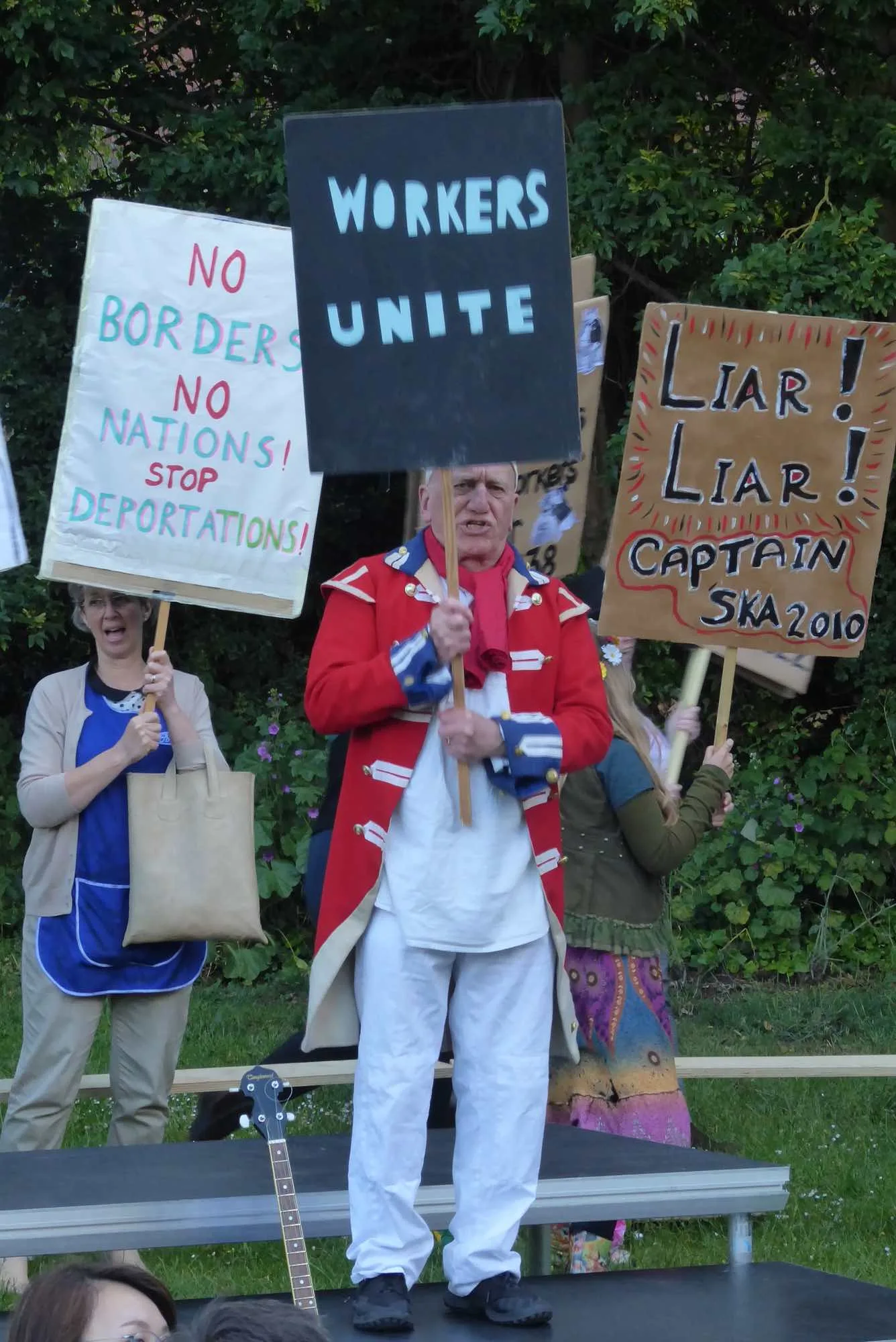
And whilst The Common Lot found space for Billy Bragg's 'There Is Power In The Union', Grace Petrie's 'I Wish The Guardian Believed That I Exist', and a wonderfully updated rendition of Captain Ska's 'Liar Liar', other significant protest movements were inevitably squeezed out. No mention of the Notting Hill riots of the 50's, or the CND movement of the 60's? Or Greenham Common? What about the rise of the National Front in the 70's? Climate change and Extinction Rebellion gets only a passing mention. But that was always going to be the ball-ache with a project like 'Songs of Hope & Protest'. How do you whittle down the choices from almost 500 years of musical protest?
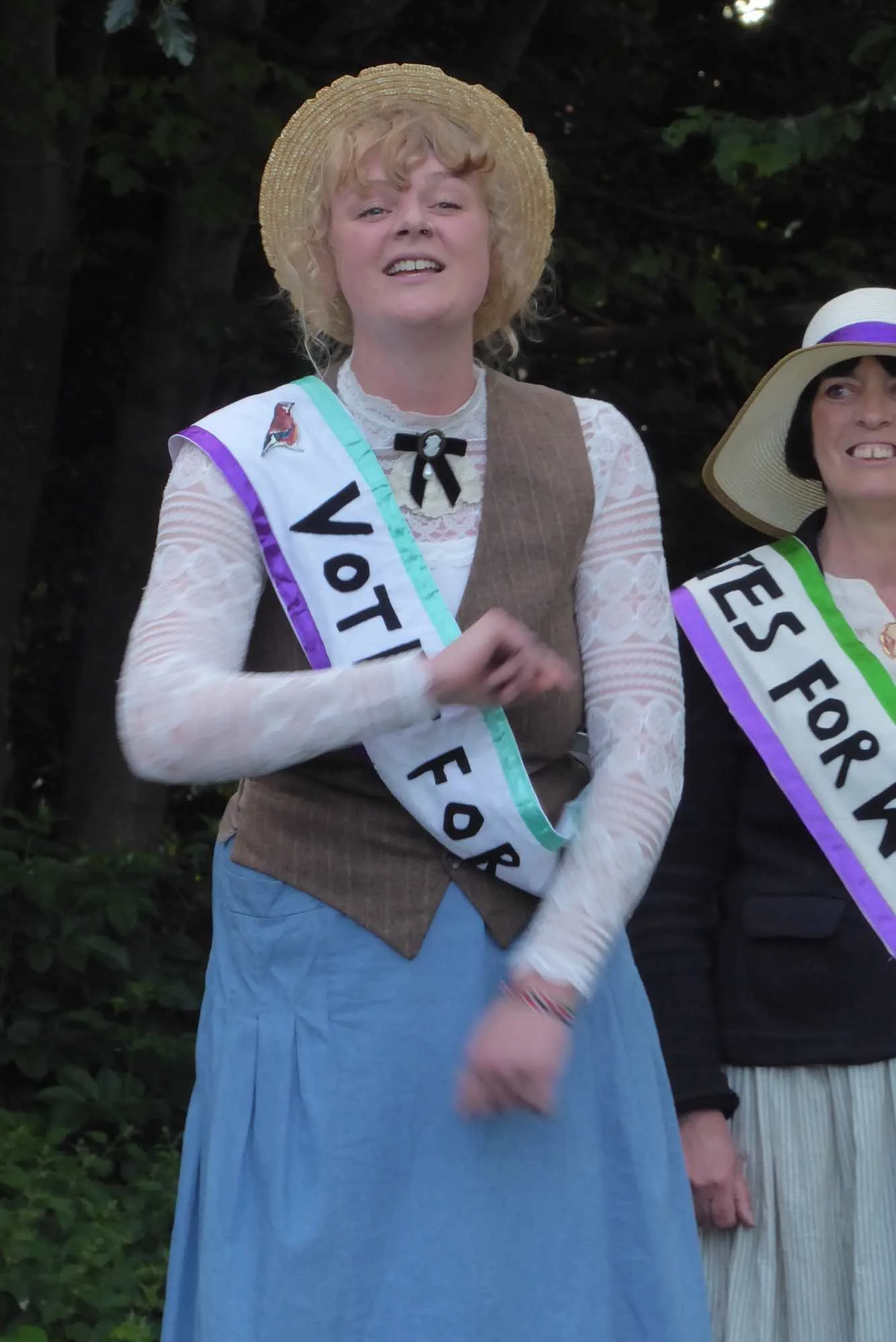
But let us not nit-pick over omissions. What 'The Common Lot' have achieved with 'Songs of Hope & Protest', within a post-pandemic timescale, is nothing short of incredible. Full marks to Simon Floyd, Charlie Caine, and the entire Common Lot for, once again, coming up with a community-based show that is entertaining, educational, topical, and inspiring. It does them, and Norwich, proud. Go see it.