The Birds and The Bees
Yes, it is comedy. Yes, it is fun, and yes it is raucous and at times saucy. McDermott's smartly integrated East Anglian references and dialectical nuance will delight local audiences. But, ultimately it is a much bigger picture, and there is so much more for us all to think about and take away from 'The Birds and The Bees'

Playhouse Theatre
Not so much a farce as a sex and relationship comedy with an environmental message, Mark Crawford's acclaimed Canadian theatre piece is successfully potted and replanted in the North Norfolk countryside in James McDermott's smart adaptation, and with confident direction from Peter Rowe. The result is a warm and hugely entertaining production which remains true to the original story, and yet guaranteed to resonate with East Anglian audiences.
A collaboration involving Norwich Theatre Playhouse, Ipswich's New Wolsey Theatre and Theatre Royal Bury St Edmunds, and with commercial partner John Stalker Productions, this unique project has succeeded in recreated Crawford's study of relationships and environmental issues in a fresh and locally sourced setting.
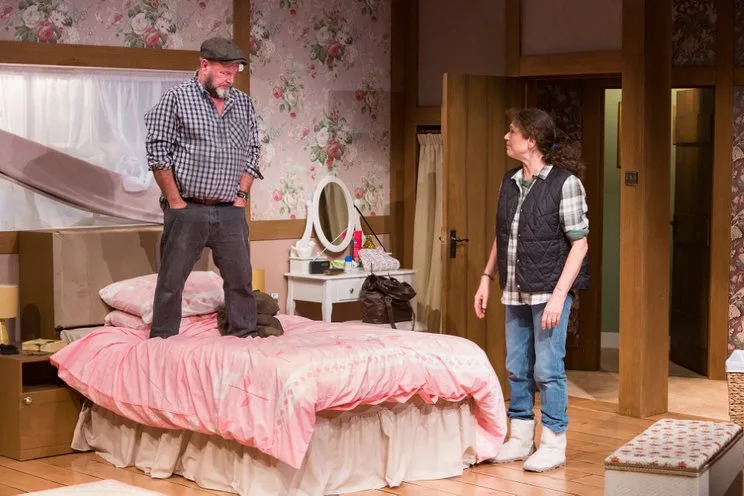
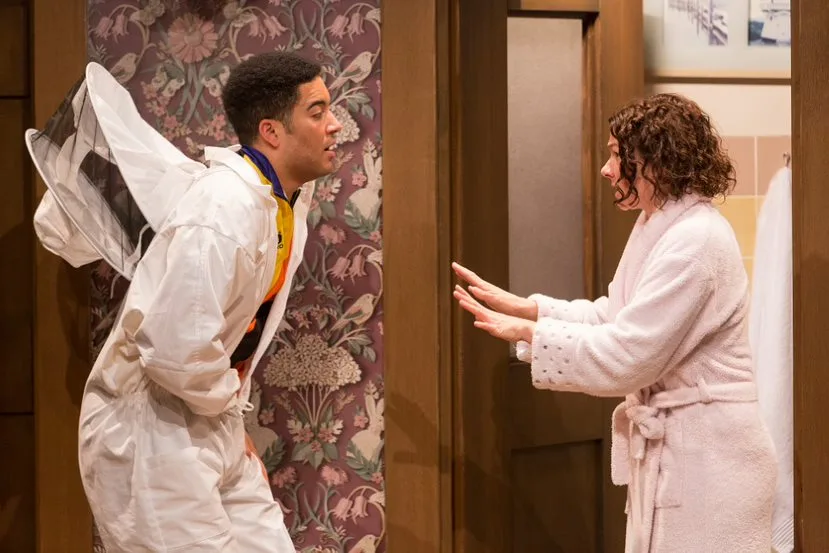
A large part of this show's success lies in believable and honest performances from the four actors involved. Mother and daughter Gail (Louise Gold) and Sarah (Laura Doddington) are each busy with their lives and work within North Norfolk (Gail with her bees, and Sarah at the local turkey farm). However, each is now without a partner or a sex life. Sarah has just moved back into her old bedroom at the age of 38. Earl (Siôn Tudor Owen) is the neighbouring farmer whose pesticides may or may not be causing Gail's bee colonies to be wiped out, and whose amorous liaisons remain strictly N.S.A. ('No Strings Attached'). Ben (Richard McIver) is a 23 year old PhD student at the UEA who is studying local bee colonies as part of his masters dissertation. He is also, as we learn later, a virgin.

Whilst not strictly speaking a farce, the intertwining of these four characters' lives are fundamntal to Crawford's original story. Played out exclusively on the first floor of Gail's farmhouse, there is inevitably an element of bawdy duvet action and the dropping of bath towels. The stage set is a cutaway section of the house that reveals the perfect set-up of two bedrooms, a landing and a bathroom door. Scene changes and the passages of time are achieved by the smartly executed dimming of the stage lights and the deft removal and rearrangement of props. Sometimes events have moved on by only a few hours, other times by several months.
But there is far more to The Birds and The Bees than the rearranging of pillows and awkward encounters on the landing. In fact, the bedroom action serves as a cleverly conceived parallel to remind us of those plummeting populations within the beehives, and how the hens at the turkey farm now are now all requiring artificial insemination.
Not that this precludes one or two unplanned surprises within the plot, and it is the way that the storyline continues over the course of almost a year that allows us time to reflect on our world and what we are doing to it, on how we lead our lives and how we frequently fail to properly connect with one another, and perhaps on how the future could be so different.
Yes, it is comedy. Yes, it is fun, and yes it is raucous and at times saucy. McDermott's smartly integrated East Anglian references and dialectical nuance will delight local audiences. But, ultimately it is a much bigger picture, and there is so much more for us all to think about and take away from 'The Birds and The Bees'. Are empty lives and monocultured existences good for a species' health and survival, or can the seemingly random introduction of new DNA into a floundering colony's genepool be nature's way of saving and safeguarding its future? Think about that as you munch down on your oatmeal at tomorrow morning's breakfast table